How does growing up in a white-normative society affect POC children’s identity, and how can we support white guardians
Project Background
Service Design | Social Design | BA Thesis
White Guardians Raising POC-children
Date
2023-2024
My Role
Service Design, User Research & Analysation, Antiracism Research, Ideation, Stakeholder Collaboration, Facilitation
Team
LAB University of Applied Sciences
Institute of Design, Mixed Finns
The thesis focuses on the development of a tool for anti-racist upbringing using user-centered methods, with
a specific emphasis on supporting white guardians raising children of color (POC).
The research and development were commissioned the
Mixed Finns community, whose objective is to broaden the perception of Finnish identity and increase awareness
of anti-racism. User-centered methods such as surveys, interviews, and the design probe -tool were employed in
the research and development process. The thesis also explored the impact of racism and the white-normative society on the formation of a child’s identity.
Project Goal
Increase white guardians’ awareness
of raising racialised children and identity impacts.Support adapted parenting approaches addressing racialised children’s specific needs.
Provide guidance for guardians lacking racialised parenting frameworks.
User Research
The research combined qualitative and quantitative methods, including netnography, a guardian survey, semi-structured interviews with guardians and anti-racism experts, and a cultural probe study. Each method was selected to capture different layers of insight, from attitudes and awareness to everyday practices.
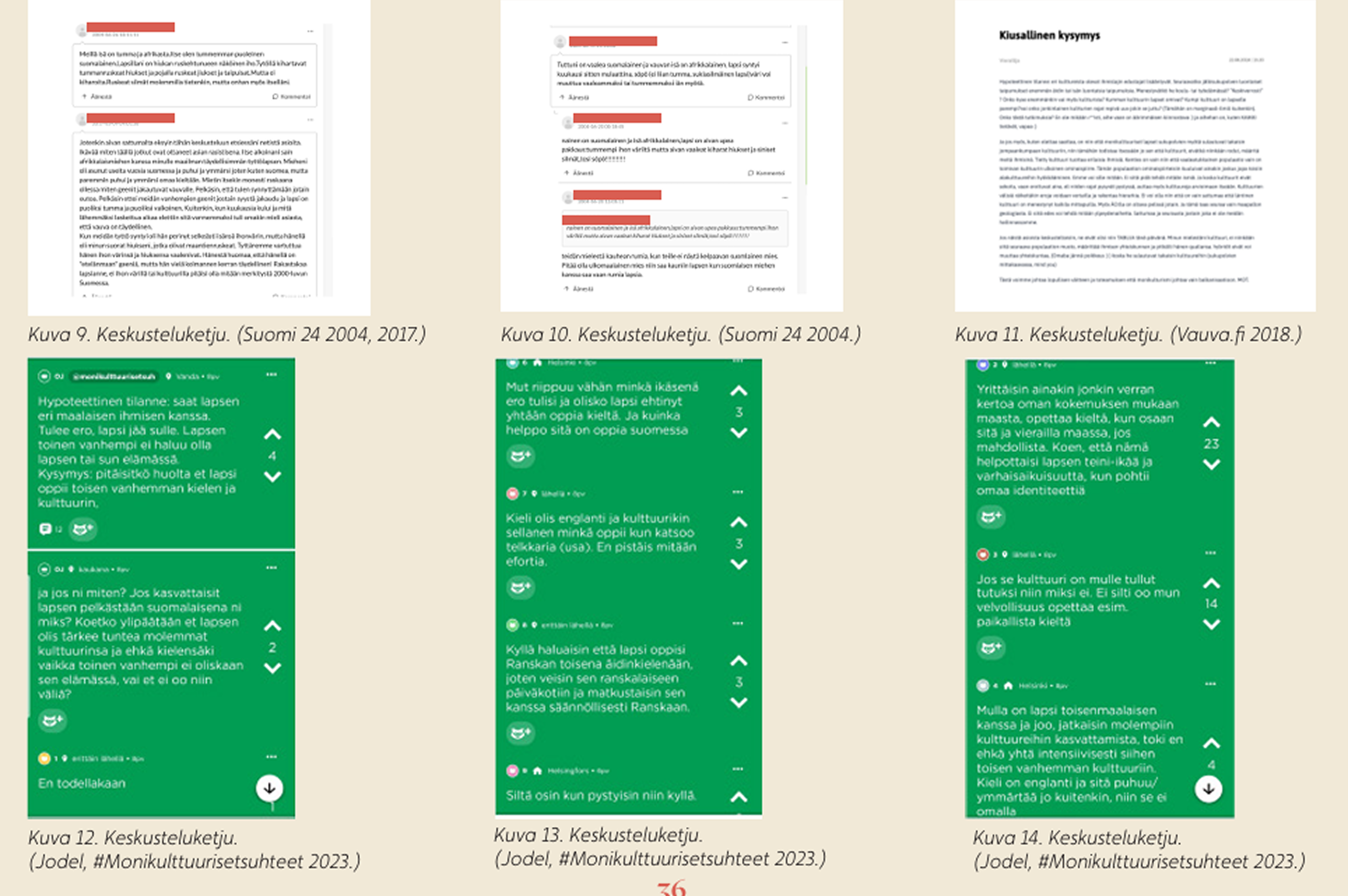
Through netnography, I observed how discussions around racialised children and parenting unfold in digital communities. I analysed conversations across social platforms, paying attention to tone, language, and levels of racism awareness. In parallel, I distributed a survey through the Mixed Finn networks to assess guardians’ understanding of racism, related terminology, and their perceived responsibilities. While many responses reflected awareness, they also revealed knowledge gaps and instances of defensive or “progressive” positioning.
Based on anti-racism experts’ interviews that offered a lot of information into the current societal structure follow-up interviews with guardians provided deeper context, particularly around uncertainty in addressing racism and the impact of silence on a child’s identity development.
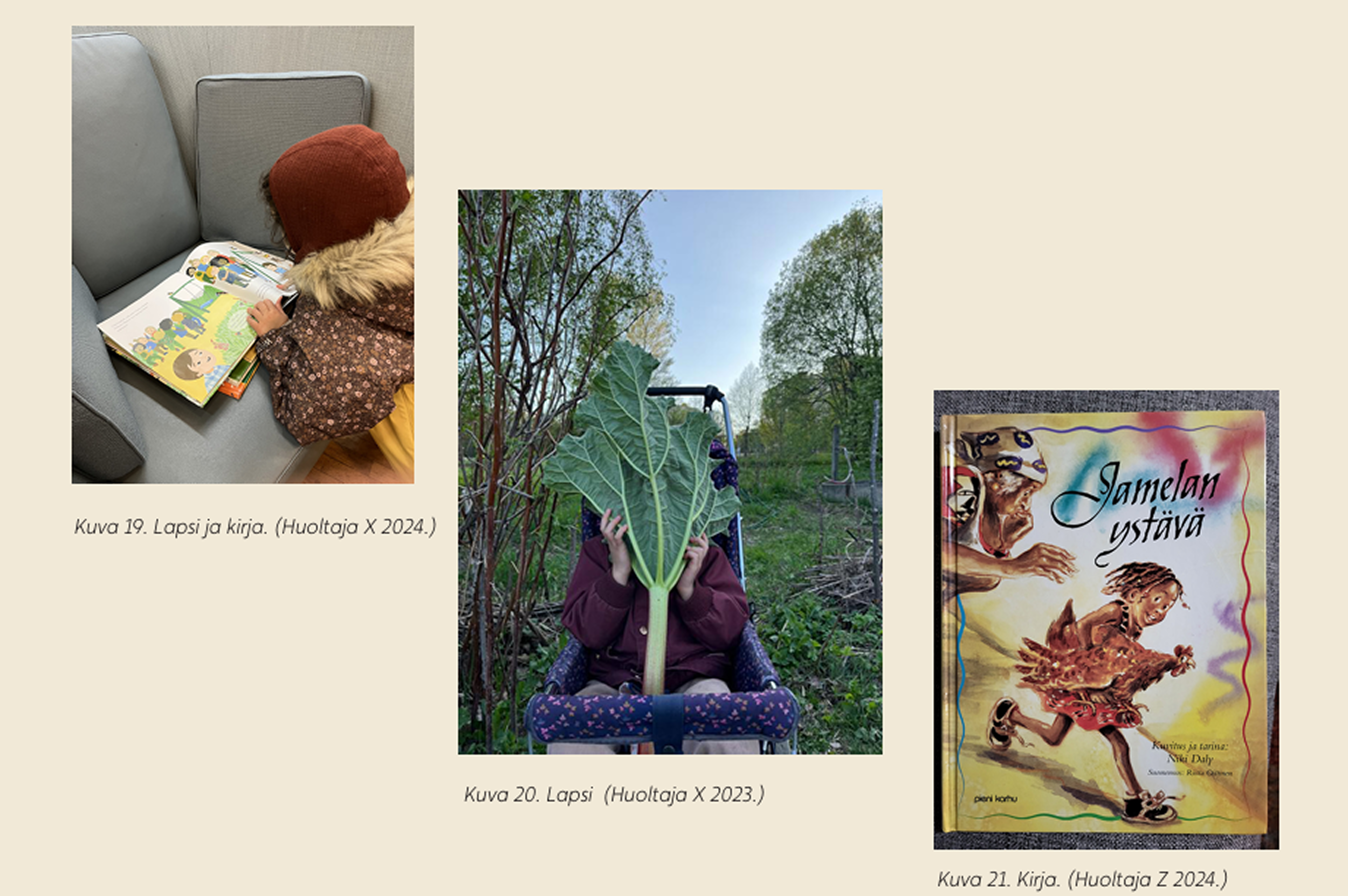
To complement self-reported data, I designed a two-week cultural probe to explore how racism, representation, and identity manifest in everyday family life.
Although the response rate was lower than anticipated, the submissions offered reflective, experience-based insights that would likely not have emerged in interviews alone. Given time and recruitment constraints, I structured the research to be lean but rigorous, ensuring that the findings directly informed later concept development and prioritisation.
Analysation
Recurring patterns in interviews included parental anxiety, the emotional burden of educating others, and attempts
to shield children from racism by absorbing the impact themselves. Some guardians demonstrated structural understanding of racism, while others framed incidents
as isolated or comparable to general teasing.
Across interviews, exoticisation, microaggressions, and uncertainty about age-appropriate conversations were common themes. These findings were synthesised into user profiles to clarify differing levels of awareness and support needs.
Survey data showed high levels of conceptual familiarity—most respondents recognised terms such as anti-racism, racialisation, and privilege, and all acknowledged white privilege.
At the same time, 64% reported that their child had experienced racism, and a quarter had not discussed racism with people of colour. Many expressed concern about racism in schools and early education, yet hesitated to address the topic directly with young children. These tensions informed the focus of my guardian interviews, where I explored lived experiences of racism, internalised bias, and the perceived responsibility to intervene.
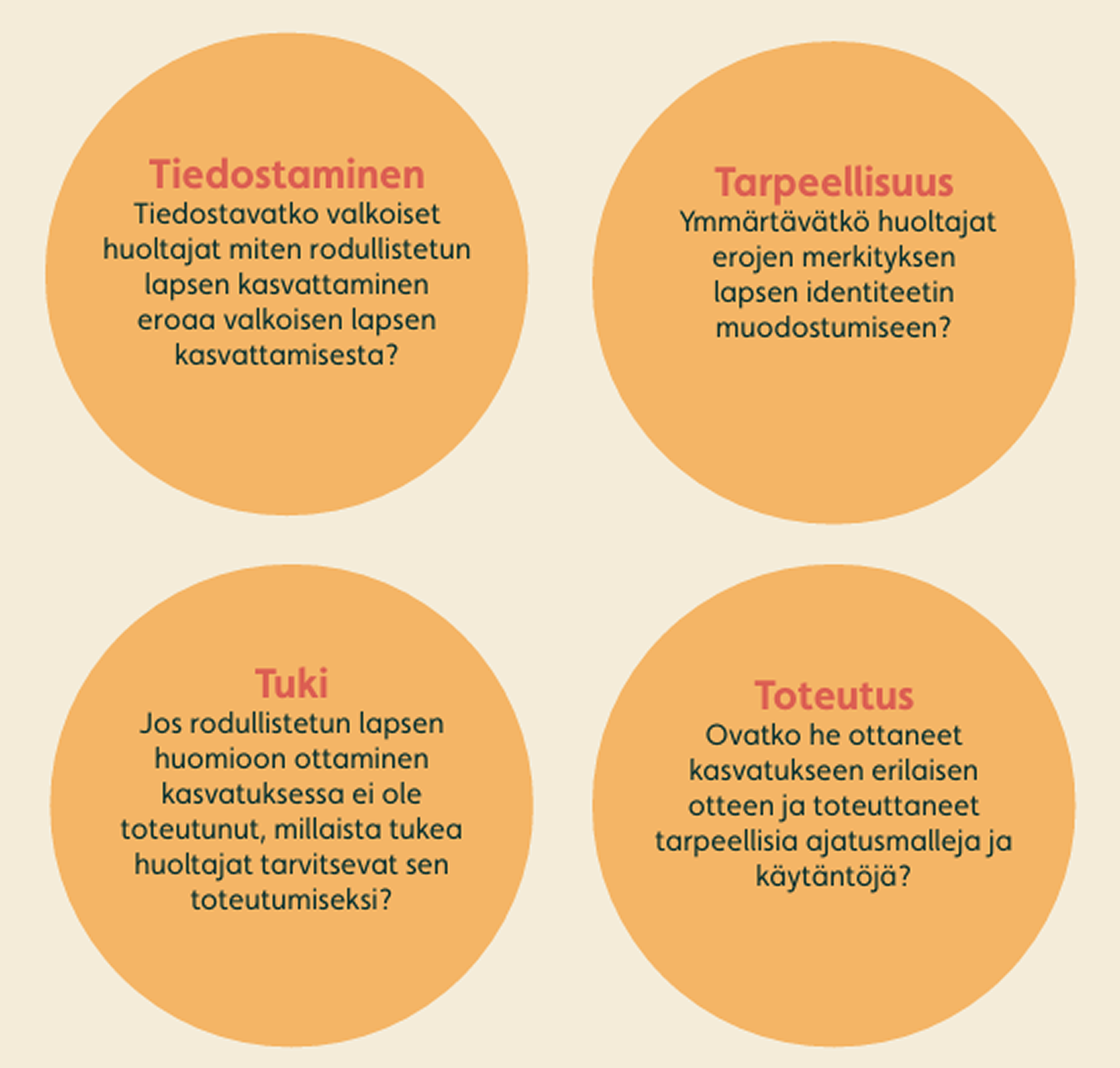
In parallel, I analysed expert interviews to understand systemic gaps and define intervention priorities. Using
a SWOT framework, I mapped strengths, weaknesses, opportunities, and threats.
Expert insight reinforced the importance of early, explicit conversations about racism, active intervention, and creating environments where children’s experiences are validated rather than minimised. This directly informed both the cultural probe design and the conceptual direction of the final solution.
Cultural probe responses were analysed through close reading and thematic highlighting. Despite a small sample, they revealed nuanced reflections on representation, literature, everyday microaggressions, and evolving parental awareness. Both respondents described how even young children notice absence or difference in representation, challenging assumptions that race awareness develops later.
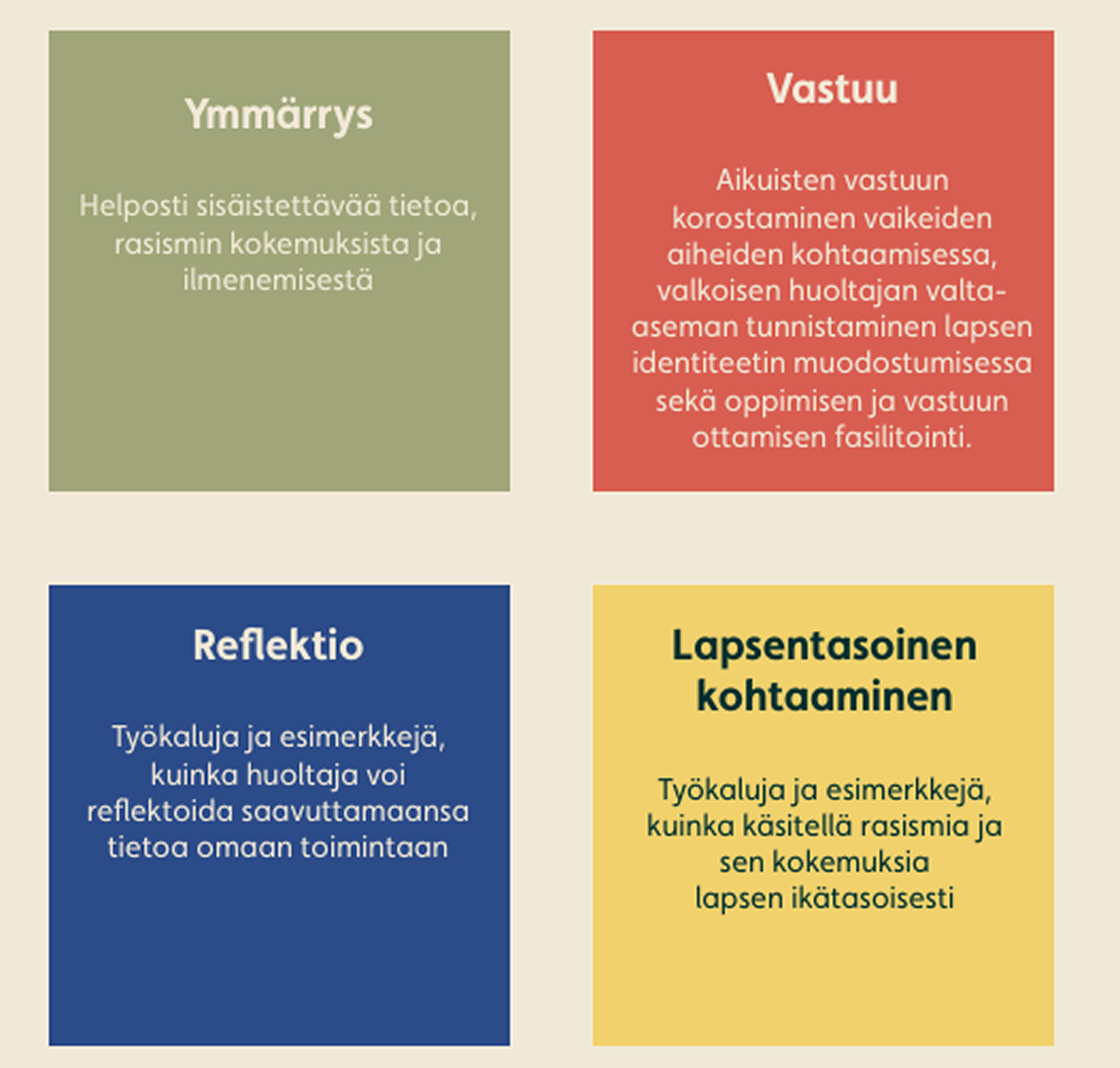
Based on these findings, I developed an ecosystem map to visualise the broader network of responsibility surrounding the child, clarifying that anti-racist upbringing extends beyond the family to institutions, communities, and cultural systems. Four Design Drivers were created. Understanding, Responsibility, Reflection and Age Appropriate Communication. These Drivers describe the needs and gaps guardians have in their knowledge and also what kind of support they require to adequately and sensitively discuss the difficult topics with their children and
social circles.
Results
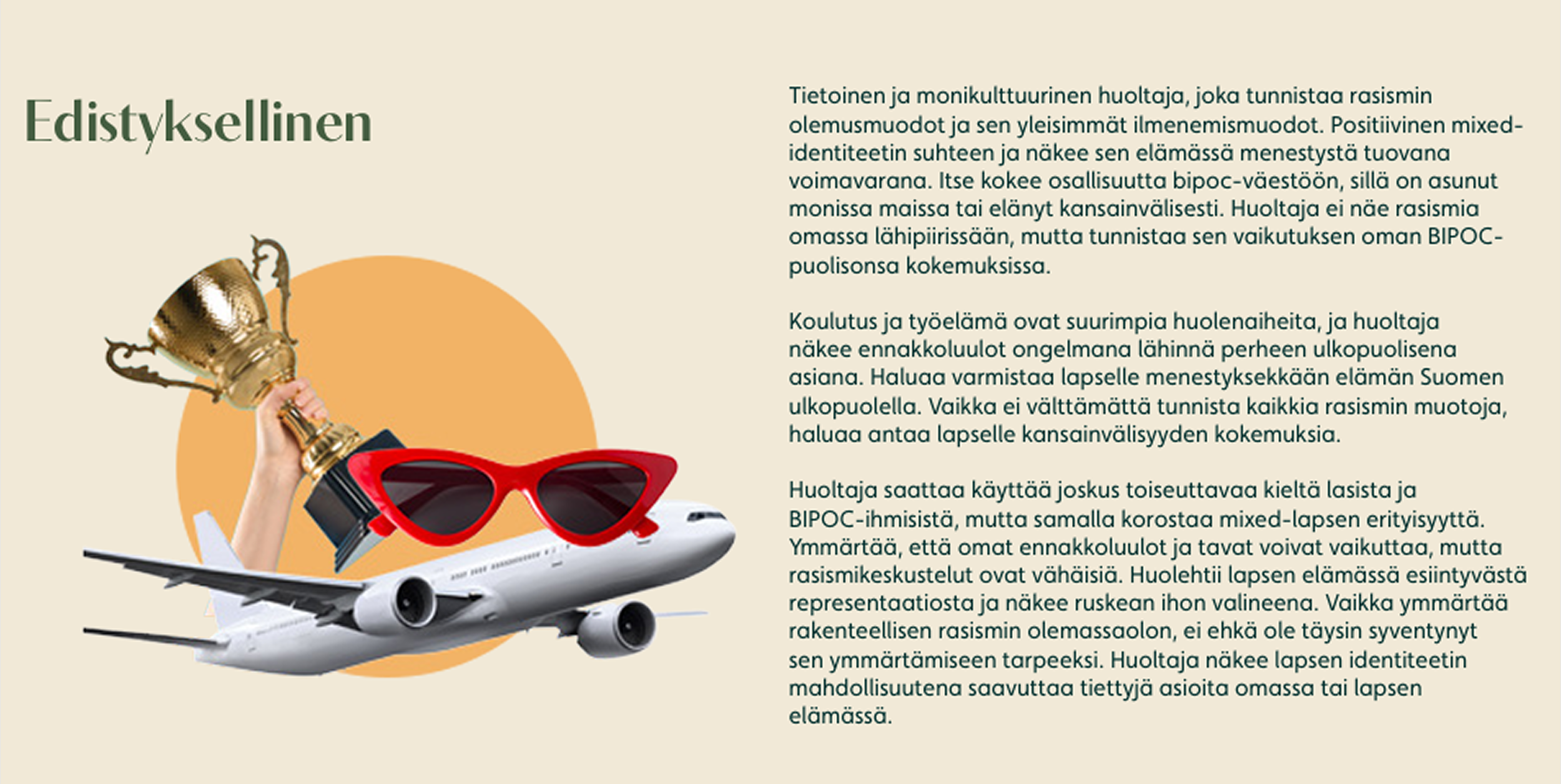
I created four guardian profiles, The Activist, The Worrier, The Advanced and The Unaware, to describe the difference in knowledge and attitudes in guardians and through empathy maps showcased where each profile could be supported, where they can support others and what kind of information they require.
The thesis is available in Finnish here and has been downloaded 350+ times, and featured in an article for the Yhteiset Lapsemme magazine.