Project Background
How to engage communities to
invigorate public places through playfulness
and creativity
Service Design | Urban Design | Community Management
Love our place
Date
2025
My Role
Student, Service Design, Community Engagement, User Researcher, Project Management
Team
IADT MA Design for Change, A Playful Cities,
Dun Laoghaire County Council
In partnership with A Playful City we joined the community placemaking project, ‘Love Our Place’, through stakeholder engagement and public space design ideation.
The project aims to invigorate three public spaces in Dun Laoghaire along the active travel route on Kill Avenue; Baker's Corner, Rose Park and St Patrick's Laneway.
Our brief involved developing and facilitating two participatory design workshop, with experts in the field of fun and play; 6th Class students at Monkstown Educate Together National School (METNS). APC asked us to divide into two groups, one focusing their workshop outdoors and on nature and one indoors and on structures.
Project Goal
Engage the local community and collect their thoughts and ideas for the area
Create concepts for the public spaces and visualise them for a community event
Prioritise imaginative ideas over
budget constraints
User Research
Our research focused on effective approaches to community engagement and co-design, particularly with young people aged 10 to 12.
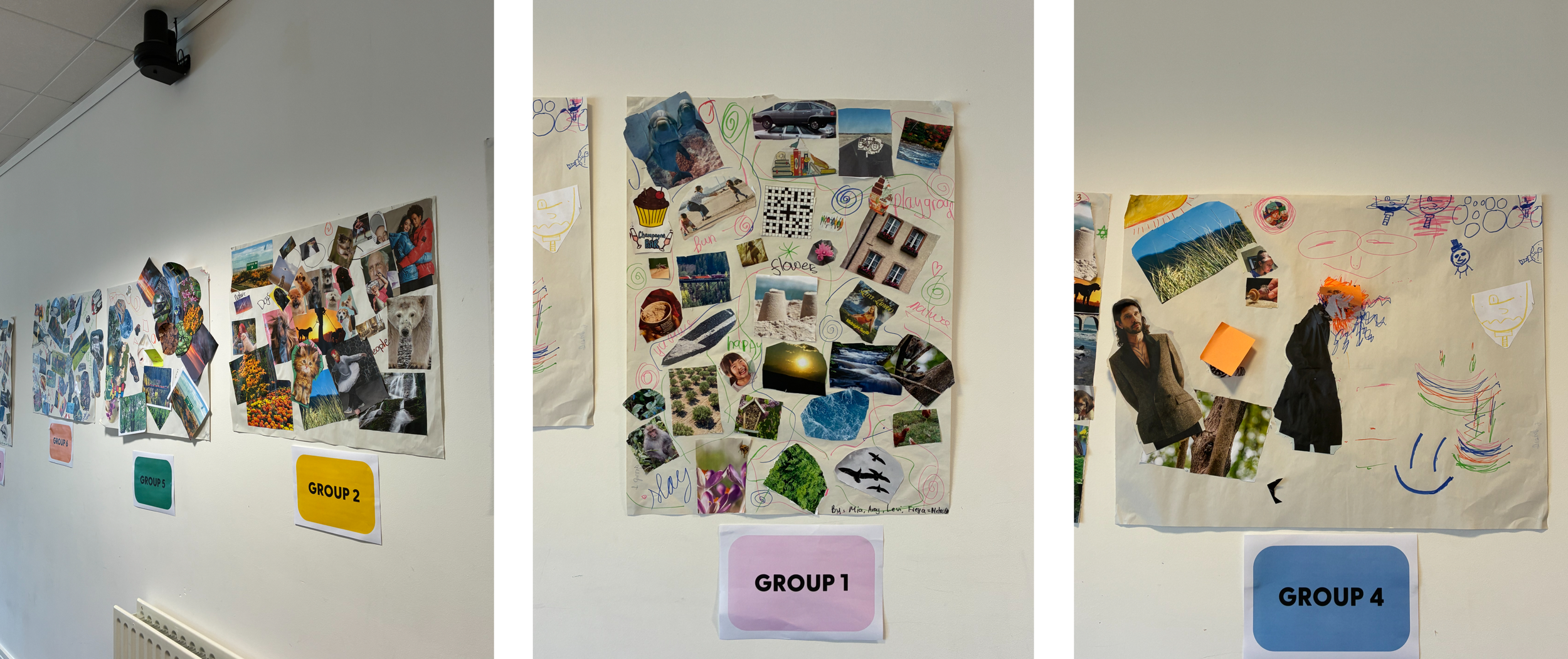
Based on our field research, we brainstormed both individually and collectively to develop concepts for the workshop. Collaging emerged as a particularly effective activity, as it allowed the children to express their ideas for the park in a creative and accessible way. Using photographs and scrapbook materials helped reduce the pressure to produce perfect visualisations, freeing the groups to explore their ideas more openly and ambitiously. This approach also aligned with APC’s aim to prioritise imaginative ideas over budget constraints at this stage.
We planned a clear structure for the workshop, including the room setup, group sizes, and activities, to make the most of the one-hour session. We also developed two focused prompts to help guide the children’s ideas while still leaving space for imagination and play.
A cool route to school
This prompt asked the children to reimagine their everyday journey to school from their own perspective. By anchoring ideas in something familiar, it encouraged practical thinking while allowing for imaginative possibilities, from cycling a BMX to swimming to school.
Best day outside
This prompt invited the groups to draw on positive memories of spending time outdoors with friends or family. By visualising these experiences, we were able to identify the types of activities and interventions that could meaningfully inform future concepts
for the park.
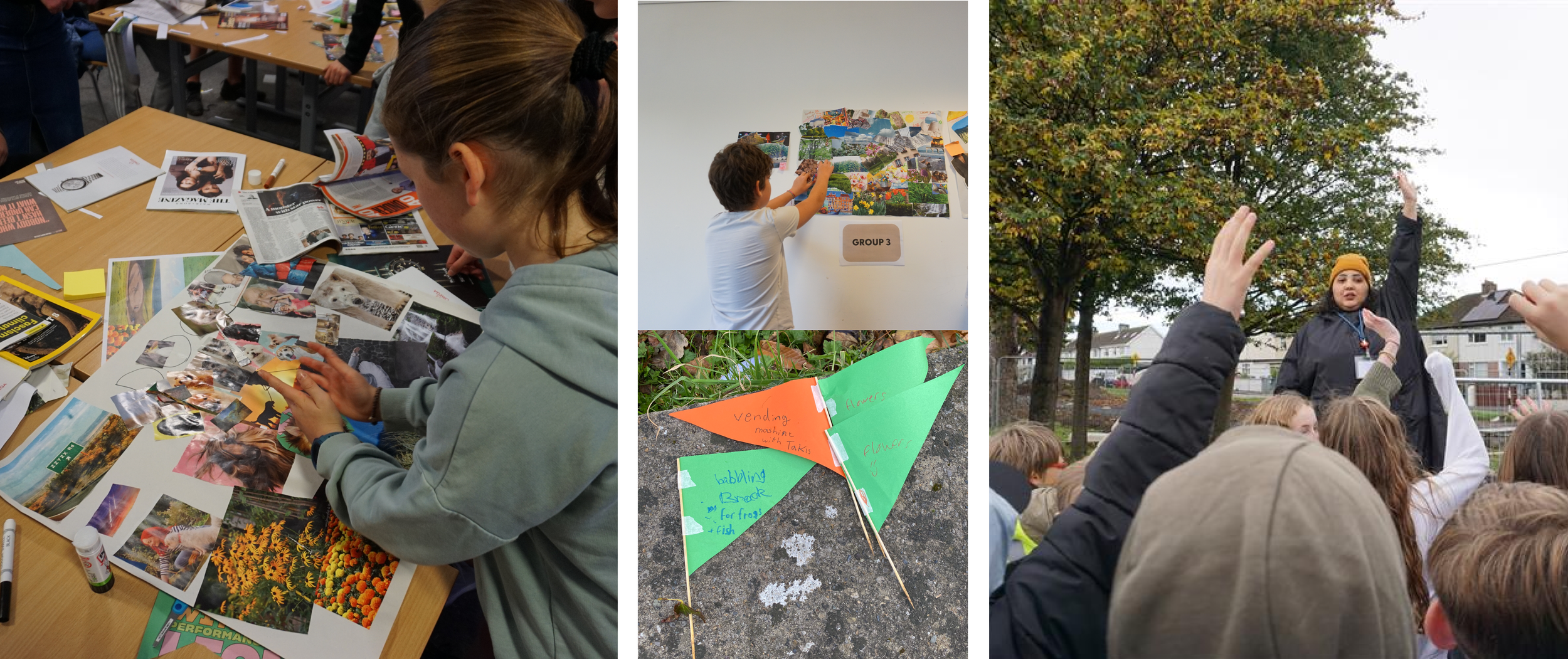
Simultaneously another workshop was held outdoors by a second team of ours. The benefit of holding the workshop on-site at Rose Park, was the students had the opportunity to navigate the space first-hand, potentially finding inspiration in what is or isn't there.
Our workshop, Flag your Freedom, was led by the over-arching question: What if you could enjoy your perfect Friday afternoon after school, what would you do with that freedom of no adults telling you what to do? Where would you do these activities in Rose Park?
Analysis
Diving into the landscape of our engagements and dialogues, our teams carefully analysed the outcomes from the two workshops. Using methods varying from thematic and content analysis to heatmaps and design drivers.
When it came to the analysis stage, we were fortunate that both the Wish Box and the collages produced clear and usable data. This was supported by our overall impressions from the day, particularly the ideas and topics the children consistently returned to in discussion. From our analysis we created three Design Drivers to guide our concepts.
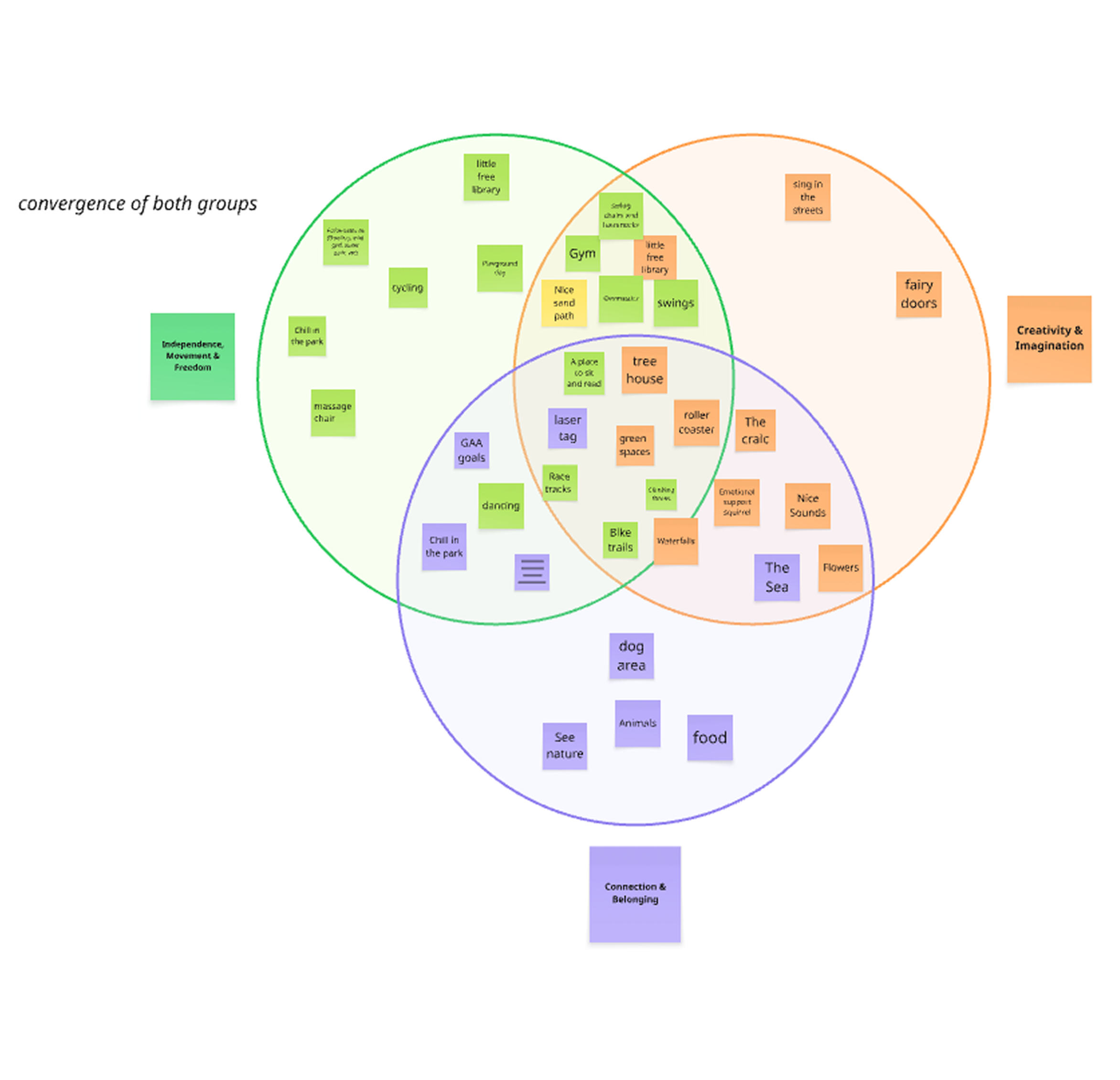
Connection & Belonging
Outdoors is not only for action,
but for togetherness, so spaces should feel safe, welcoming and socially supportive. Social companionship doesn't only
include humans but also spaces
for more-than-human & animals.
Independence & Freedom
Spaces that encourage kids to move freely and be spontaneous, including areas without rigid rules or a single "right” way to play. This gives kids agency through freedom and promotes movement and activity.
Creativity & Imagination
Children gravitate towards colourful, irregular, expressive themes and patterns. They value places that feel unique, alive
and playful. Spaces should provide sensory elements, participation and stimulate creativity in more ways than one.
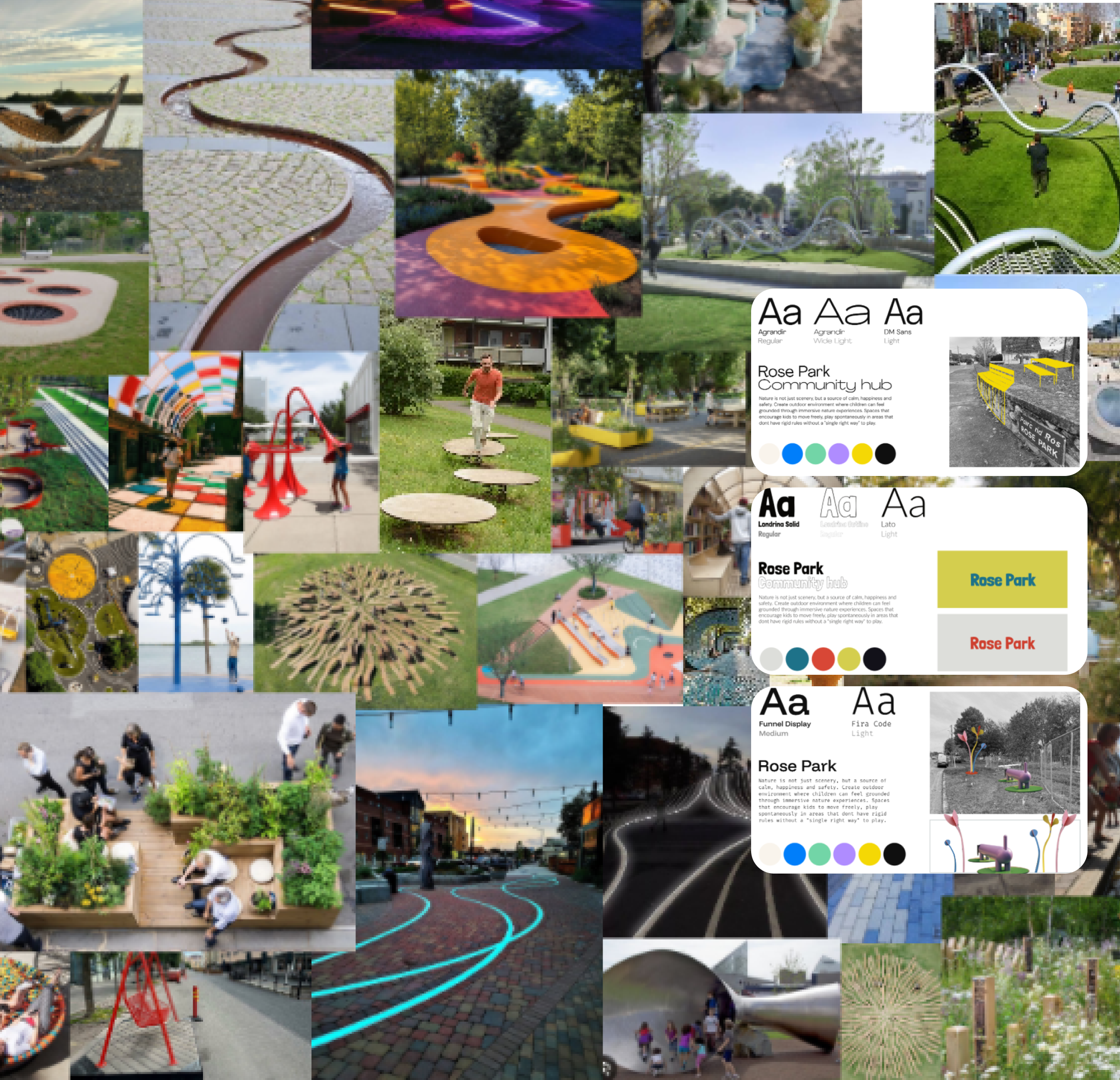
The Concept
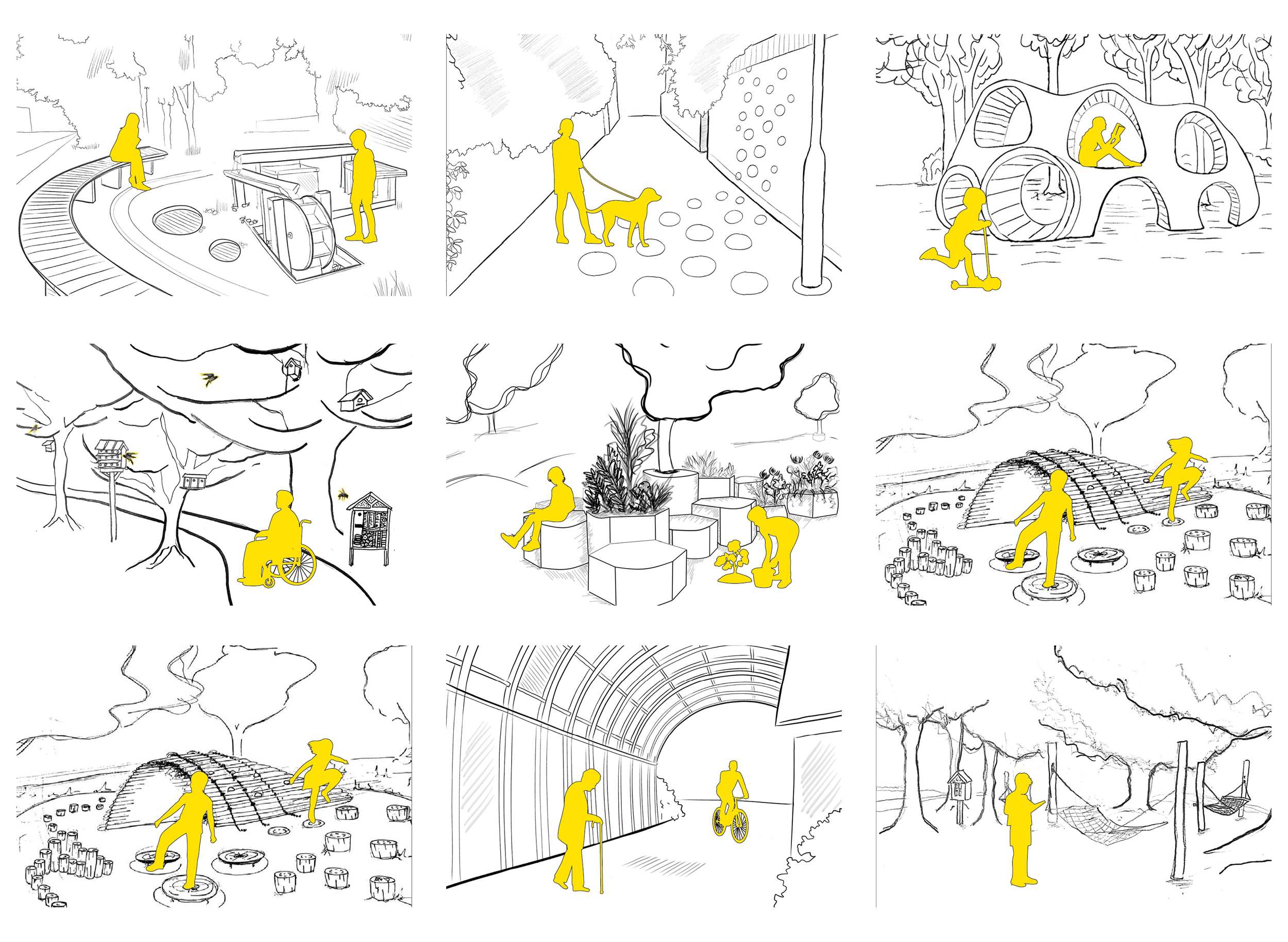
Guided by the design principles and conversations with the students, a collection of ideas were developed.
These included experiences, objects, way-finding and amenities for the three spaces. Critically assessing the initial ideas, the team considered opportunities for community engagement and
how the concepts might facilitate positive experiences within
the community.
The path had now led us to visualise potential ideas in keeping with a public space that fosters connectivity.